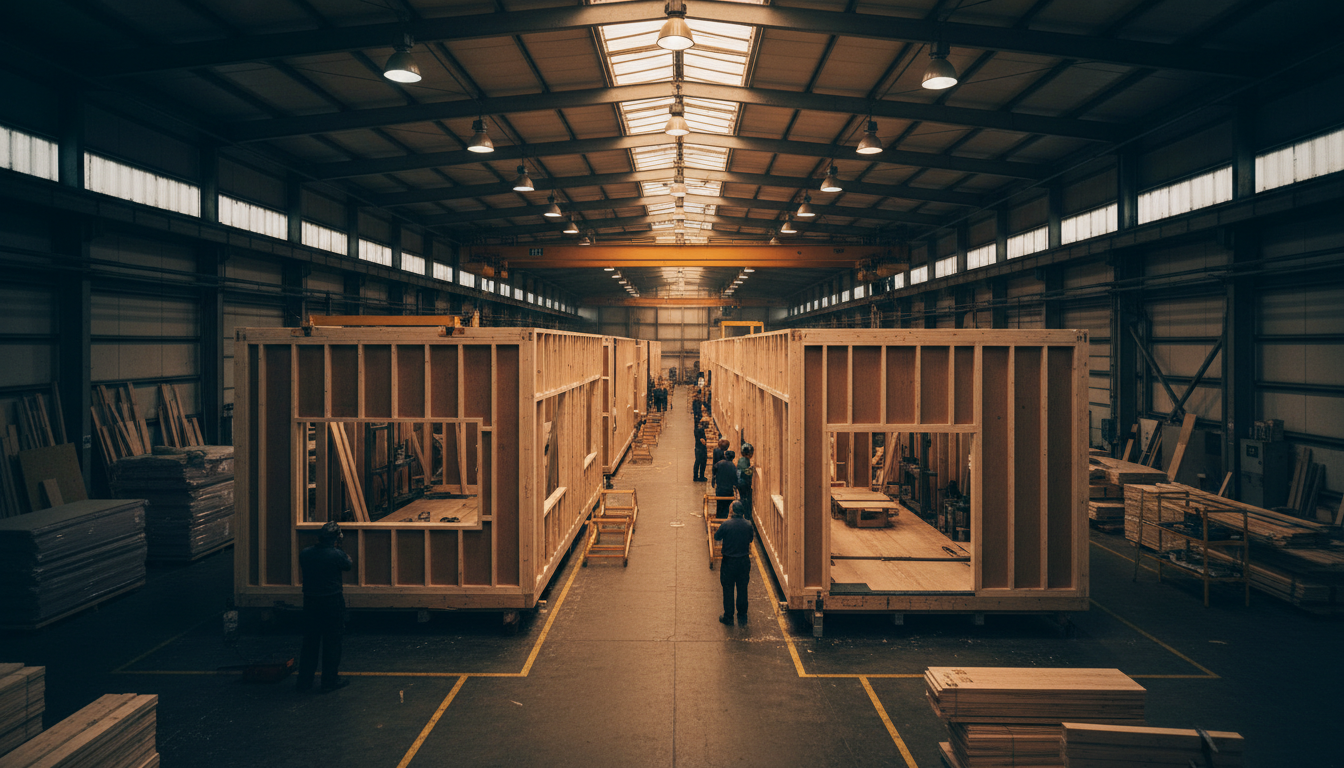
Everybody keeps talking about Japanese builders expanding into the United States housing market as if the story is primarily about foreign investment, acquisitions, or global capital movement, when the much more important story sitting underneath the surface is that the American housing industry may be approaching the exact same type of economic and psychological crossroads the automotive industry faced decades ago when Japanese automakers first entered the United States and quietly changed the market forever.
Because people forget what Toyota originally represented in America.
Toyota was not a symbol of success, luxury, or emotional status when those vehicles first entered the United States market. They were viewed by many Americans as cheap practical foreign cars that existed primarily because they were affordable, fuel efficient, and reliable during periods where consumers increasingly needed practicality more than pride.
That historical context matters because what many people inside housing still fail to fully understand is that affordability problems do not simply emerge because interest rates rise or because construction costs increase. Affordability problems often emerge because entire industries slowly drift further and further away from practicality while consumers, companies, cities, and financing systems all collectively normalize increasingly expensive expectations over long periods of time.
Underneath all the headlines surrounding foreign investment and factory-built housing sits a much larger and uncomfortable question about whether the American consumer is psychologically prepared to accept a more practical version of housing after spending decades emotionally chasing increasingly premium versions of it.
The Real Problem With Factory Housing Has Never Been Technology
Every time conversations surrounding Japanese builders, modular construction, or offsite manufacturing start gaining momentum, the industry immediately begins talking as if factory-built housing itself is the silver bullet solution that will suddenly solve affordability across America.
But what many people outside the industry fail to understand is that variations of this conversation have existed for decades.
For more than twenty years people inside housing have attempted to revolutionize construction through modular systems, offsite manufacturing, and factory-built concepts, yet very few organizations have actually succeeded in creating a product that is simultaneously cheaper, scalable, operationally efficient, aesthetically accepted by municipalities, and emotionally embraced by consumers at mass scale.
People say they want affordable housing, but emotionally many consumers still want the housing equivalent of the modern Toyota Camry rather than the original stripped-down Corolla that first entered the market decades ago. They want the upgraded product. They want the nicer streetscape. They want better finishes. They want the emotional satisfaction attached to ownership itself.
Manufactured Housing Revealed the Industry’s Biggest Psychological Barrier
Companies like Clayton Homes have spent years refining manufactured housing systems at substantial scale, yet despite operational improvements and affordability advantages, manufactured housing still carries emotional stigma in the minds of many consumers, cities, and communities because people continue associating it with lower social status, temporary living, rural poverty, and visual inferiority compared to traditional site-built housing.
That perception problem matters far more than most people inside housing want to admit because it reveals something extremely important about consumer behavior.
Consumers do not simply buy housing based on mathematical affordability.
They buy housing based on how the product makes them feel about themselves, how it reflects their identity, how it compares socially, and whether the emotional tradeoff feels acceptable relative to the financial compromise being made.
The original Toyota Corolla succeeded in America not because people dreamed about owning one, but because consumers eventually reached a point where practicality became more important than ego, and Toyota slowly figured out how to package practicality in a way that no longer felt like sacrifice. Over time the product improved, the perception improved, and eventually the practical option became the dominant option.
Housing may now be approaching a very similar moment.
Builders Will Build Whatever Buyers Are Willing to Buy… Profitably
One of the laziest narratives in housing right now is the idea that builders simply refuse to build affordable housing because they are unwilling to innovate or unwilling to adapt, when the reality is far more complicated than that.
Builders continuously respond to consumer demand, municipal restrictions, entitlement structures, operational realities, financing limitations, and profitability constraints simultaneously.
If consumers overwhelmingly embraced smaller simpler practical homes tomorrow, cities approved them efficiently, and builders could profitably deliver them at scale, the market would adapt remarkably quickly.
But that is not where the industry currently sits psychologically.
Because despite all the affordability conversations dominating headlines right now, much of the market still emotionally wants the upgraded modern Camry while simultaneously asking why the payment no longer works.
That is the contradiction rates exposed.
What Does This Mean for Small Home Builders?
Small home builders need to stop obsessing over whether buyers say they want affordable housing and start paying much closer attention to what buyers are actually willing to purchase once real money, real monthly payments, and real-life tradeoffs enter the conversation.
Because one of the most important realities the housing industry still struggles to admit is that consumers almost never buy purely based on what they emotionally desire in a perfect world. They buy based on the intersection of aspiration, practicality, monthly survivability, and the level of compromise they are emotionally willing to tolerate without feeling like they are losing status, comfort, or identity in the process.
The future opportunity for smaller builders may not come from trying to out-luxury the national builders or endlessly chasing larger and more expensive products, but rather from understanding how to deliver homes that feel emotionally satisfying enough for buyers while quietly stripping away unnecessary complexity, unnecessary cost, and unnecessary excess underneath the surface.