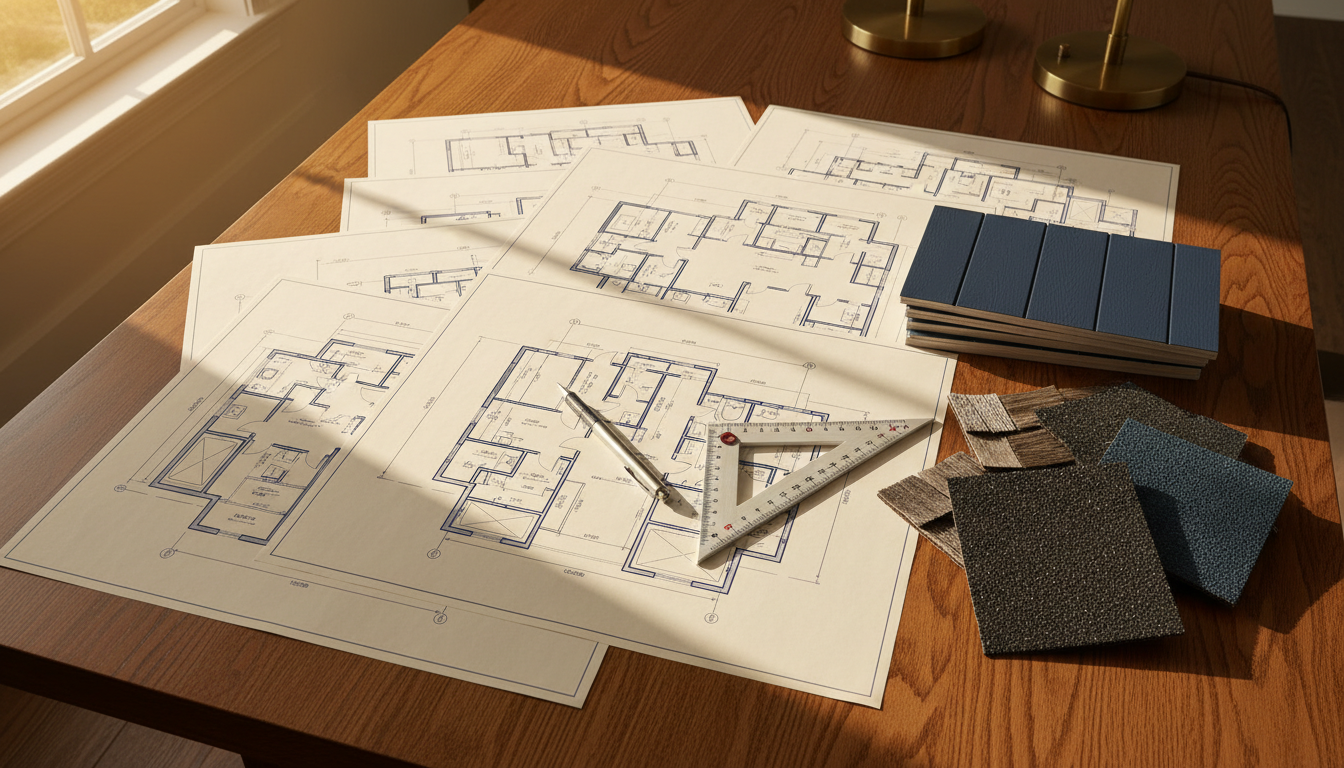
Everyone’s Watching Rates. The Smart Builders Are Watching Their Plans.
Every headline wants to talk about mortgage rates.
Every panel wants to debate politics, the Fed, tariffs, and Washington’s next move.
But that’s not where the real affordability problem lives.
Affordability isn’t broken because buyers disappeared. It’s broken because the product drifted away from reality slowly, quietly, and expensively. And when rates finally exposed that drift, most builders reached for incentives instead of asking the harder question:
Did we design the right house in the first place?
The Problem We Don’t Want to Admit
Demand didn’t vanish. Qualification did.
For years, builders designed homes for a world of cheap money. Bigger footprints. More baths. More articulation. More everything. And it worked until it didn’t.
When rates were low, pricing power covered mistakes. When rates rose, those mistakes became visible.
Homes got larger faster than affordability could keep up. And when the monthly payment snapped back, the industry froze, not because buyers don’t exist, but because the product no longer fits their reality.
This Isn’t Politics. It’s Physics.
It’s easy to blame regulation, fees, or the Fed. And yes, some markets are genuinely constrained.
But here’s the uncomfortable truth: even in markets without extreme political friction (Texas, the Southeast, parts of the Midwest), costs still exploded.
Why?
Because product discipline lagged while complexity accelerated.
The builders winning today didn’t guess right on rates. They designed correctly for reality and never drifted far from it.
How We Got Here: The Size Trap
Let’s zoom out.
The starter home of the 1950s and 60s:
- ~1,000 square feet
- 3 bedrooms
- 1 bath
- Simple rooflines
- Optional garage
Today’s “entry-level” home:
- 2,400–2,600 square feet
- 4 bedrooms
- 3 baths
- Flex rooms
- Two stories
- Complex elevations
That’s more than double the size and more than double the structural cost.
More lumber. More windows. More bathrooms. More mechanical complexity.
And here’s the part no one wants to say out loud:
We don’t even design these larger homes efficiently.
Where Margin Is Actually Lost
Most margin loss happens before the home is ever drawn.
Not in the sales office. Not at the closing table. At the design table.
Product decisions made without alignment to buyer budget, trade reality, and constructability lock in cost early and permanently.
A disciplined 2,500-square-foot plan can cost $10–$20 per square foot less than an undisciplined one. That’s not a theory. That’s math. And it’s happening every day in real markets.
The Incentive Trap
When affordability tightened, most builders tried to solve it downstream, with incentives.
That’s already a timing problem.
If you need incentives to fix a product, you’re late. If you keep using incentives instead of fixing products, you’re buried.
Incentives are not a strategy. They’re a last line of defense.
The Builders Who Are Actually Fixing It
The best examples didn’t wait.
D.R. Horton didn’t pray for rates to fall. They re-anchored products around attainable price points, simplified plans, and leaned into repeatability.
Lennar built a Core Series so vetted that budgeting, takeoffs, and approvals move faster because certainty beats customization.
KB Home took heat for pulling features others consider “standard,” not because they’re cheap but because they’re disciplined.
None of these strategies are cosmetic. They’re structural.
Affordability is not created in the sales office. It’s engineered upstream.
Scale Isn’t the Excuse You Think It Is
Small builders love to say, “I don’t have their scale.”
Wrong.
You always have some scale. The question is whether you’re disciplined enough to leverage it.
Repeat product. Reuse plans. Simplify structure. Stop reinventing homes for every community.
Trade partners price confidence, not chaos.
Every repeated plan shortens learning curves. Every reused elevation lowers risk. Every simplified structure saves time and money.
The Ego Tax
Here’s the hardest part.
Many builders know their product is overdesigned but won’t fix it.
Why?
Because fixing it means admitting a mistake.
That sunk-cost ego keeps builders stuck defending yesterday’s decisions instead of designing tomorrow’s success.
What Discipline Actually Looks Like
Builders who fix affordability do a few things differently:
- They define alignment before design.
- They design around a zero-based construction budget, not a wish list.
- They simplify structure early, where 50% of cost is locked in.
- They standardize products to improve absorption, not impress awards juries.
They ask one simple question first:
Who is the buyer and what can they actually afford?
Opinion: Precision Beats Optimism
The next cycle won’t reward hope. It will reward precision.
Politics will always be uncertain. Rates will always move. Costs will remain elevated.
But disciplined product strategy is controllable.
Builders who own alignment, timing, and structure early turn rate increases into headwinds, not walls.
Conclusion: Control the Inputs
Affordability is not fixed by waiting in Washington.
It’s fixed by owning your product before it owns your margins.
Design for the buyer you know, not the one you wish would show up. Let incentives be your last tool, not your first reaction. Control what you can control.
Because in this business, the builders who build with clarity will always outlast the cycle.