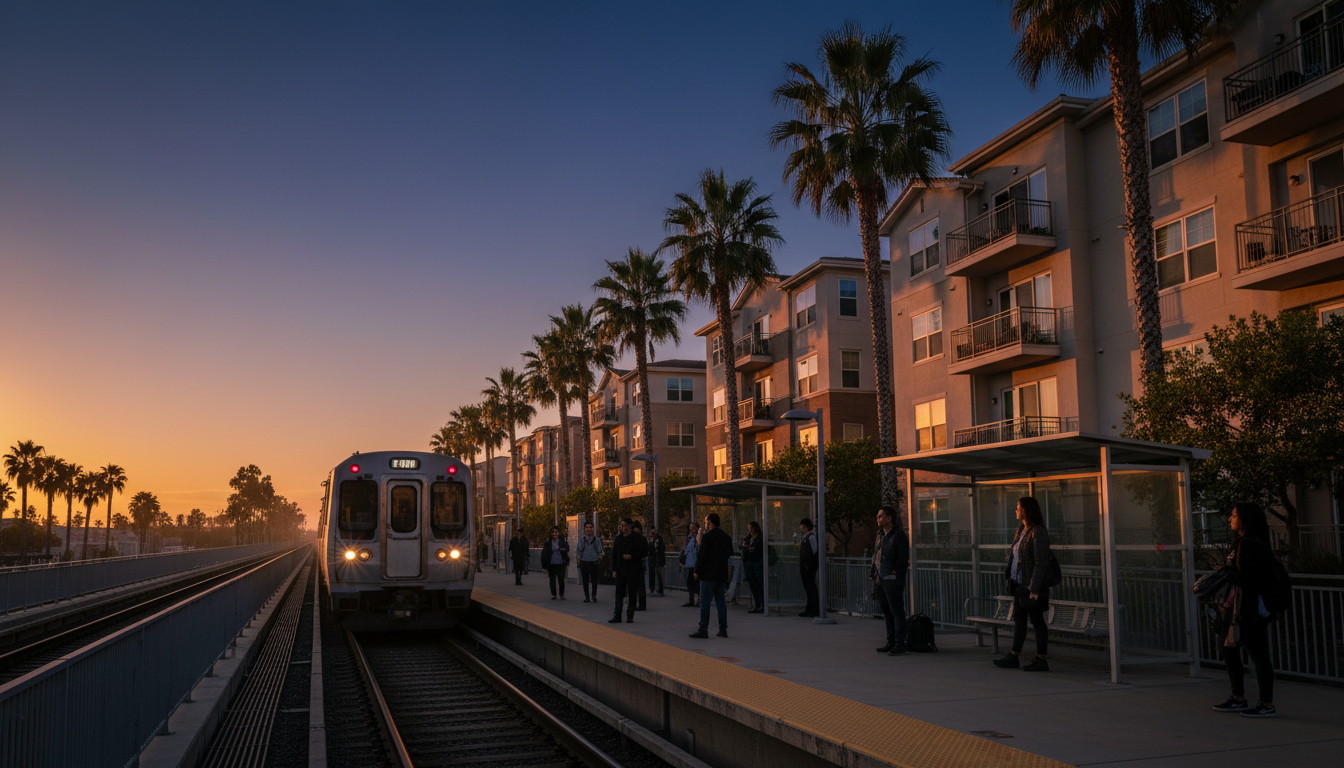
The Illusion of Abundance
Sacramento says it wants “abundant and affordable” homes near transit. Sounds noble. But read the fine print of SB 79 and you’ll see something else entirely: a state rewriting the rules of housing, not to empower builders or cities, but to centralize control.
They call it “density by design.” What it really is, is density by decree.
SB 79 gives the state the power to override local zoning within a half mile of train tracks and bus corridors. The goal? Force more housing where infrastructure already exists. The cost? Local democracy.
The Numbers That Actually Matter
SB 79 isn’t just a map redraw. It’s a full re-engineering of authority.
- Automatic entitlements around rail and bus stops.
- Mandated affordability set-asides that make math impossible for many builders.
- Labor mandates that spike costs long before ground is broken.
- Demolition restrictions that handcuff redevelopment.
And while the headlines celebrate “streamlined approvals,” the real winners aren’t families waiting for homes; they’re the bureaucracies collecting new leverage.
Predictability? Only if you trust the people who’ve already failed to deliver supply for 20 years.
Balance Sheet = Control
Sacramento has learned the oldest trick in the book: if you can’t solve it, regulate it.
SB 79 shifts the financial risk downstream, onto builders, landowners, and local taxpayers. Cities lose zoning power but keep the infrastructure bill. Developers get “certainty” on paper but pay the price in compliance.
It’s the political equivalent of handing you a loaded backpack and calling it a parachute.
The Political Blind Spot
Both sides are spinning.
- Progressives call it a climate win: more homes, fewer cars.
- Conservatives call it a power grab: less freedom, more bureaucracy.
They’re both right, and both missing the point. SB 79 isn’t about housing or climate. It’s about control of the lever: who decides what gets built, where, and when.
And in that tug-of-war, actual affordability gets crushed between ideology and inefficiency.
The Builder’s Reality Check
Let’s be clear: the pro-housing crowd isn’t wrong to demand reform. California’s local politics have strangled housing production for decades. SB 79 tries to cut the knot. But it replaces it with a different kind of rope, thicker, tighter, wrapped in paperwork.
You can’t legislate affordability if you don’t legislate feasibility. You can’t demand density without addressing cost structure. And you can’t claim progress while bankrupting the very partners who can build it.
The Bigger Picture
This bill is a symptom, not a solution. California doesn’t suffer from a shortage of laws; it suffers from a shortage of execution.
If the state truly wanted to fix housing, it would:
- Simplify codes, not multiply them.
- Incentivize efficiency, not compliance.
- Reward delivery, not virtue signals.
Instead, SB 79 doubles down on bureaucracy, while pretending to be bold.
Opinion: The Courage to Decentralize
The most radical act California could take right now isn’t more central control; it’s trusting its builders and cities.
Give local teams frameworks, not handcuffs. Measure outcomes, not politics. And stop confusing regulation with leadership.
Conclusion
SB 79 isn’t the revolution it claims to be. It’s a reminder that in California, the loudest promises often come wrapped in the quietest power grabs.
If housing is truly a human right, then policy should empower the people who can actually build it, not the ones who only know how to vote on it.
Until then, “Density by the Rails” will stay what it is now: a slogan on a press release, not a solution on the ground!